
Exploring the changing tide in managing depression

The KOASTAL program is investigating the effects of a study medicine intended to work in a new way to treat adults living with depression (also called Major Depressive Disorder or MDD). This study medicine is being evaluated to see whether it can improve the symptoms of depression, including feelings of having less interest or pleasure in the things you used to enjoy (this is called anhedonia, say an-hee-doh-nee-uh)
This medicine is being studied for once-daily use in depression and is not currently approved for sale in any country
The KOASTAL study program is sponsored by Neumora Therapeutics, Inc.
KOASTAL Study Participation



You may be able to participate if you:
You may be able to participate if you:
- are 18–65 years old
- have been told by a doctor that you have depression
- have had symptoms of depression for 1–12 months
- use birth control, and are not pregnant or breast feeding and
- can give consent and can follow study instructions
You may not be able to participate if you:
You may not be able to participate if you:
- have tried at least 2 antidepressants that did not work for your current depressive episode
- have a condition such as a personality disorder, eating disorder or bipolar disorder
- had a substance or alcohol use disorder in the last year
- feel suicidal or at serious risk of ending your life
- have other specific health conditions that may impact your ability to participate

Challenges in living with depression
- The most common antidepressants prescribed for depression include selective serotonin reuptake inhibitors (SSRIs) and serotonin and norepinephrine reuptake inhibitors (SNRIs). However, these medications do not manage depression successfully in all people1
- In one study, only about 3 of 10 people with depression experienced relief from all their symptoms when using these medications as their first treatment1
- People treated for depression with currently approved antidepressants often experience side effects, such as weight gain, sexual problems, stomach/digestive issues, and lack of emotions, which can mean they do not take their medications as prescribed by their doctors2-7
- Current antidepressants do not fully treat anhedonia (feelings of having less interest or pleasure in the things you used to enjoy), which occurs in up to 7 of 10 people with depression8, 9
About the study medicine
This once-daily medicine was created to work in a new way on specific pathways in your brain that affect key symptoms of depression, including the feelings of having less interest or pleasure in the things you used to enjoy. This is a new approach that works differently than SSRIs or SNRIs
What to expect in the KOASTAL study
KOASTAL is studying the potential efficacy and safety of the study medicine in over 900 people with depression. You will receive treatment related to KOASTAL from your study doctor and can continue to receive care from the doctor who usually treats your depression
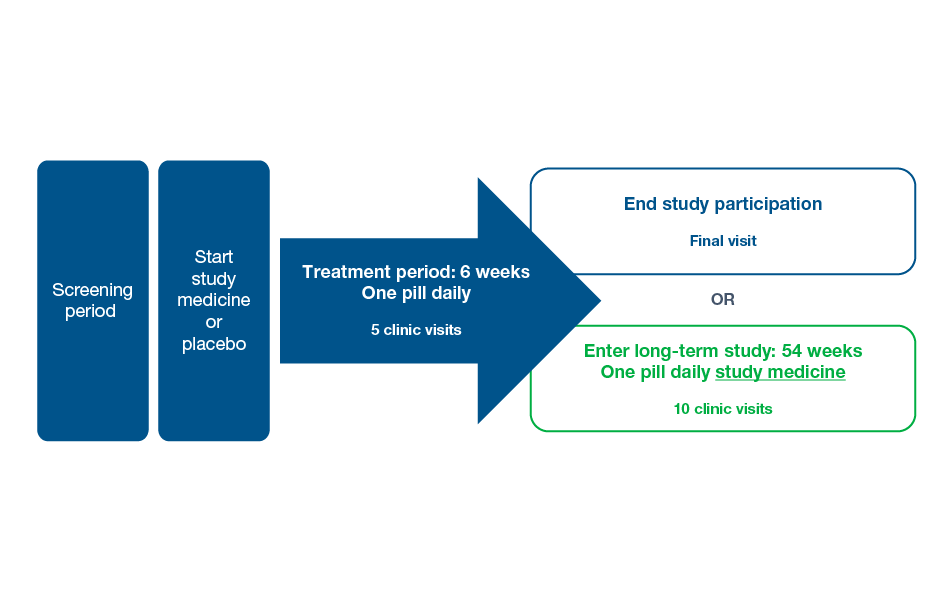
There are 3 parts to the study:
A screening period of up to 28 days
A 6-week treatment period
A long-term study that you may be able to join if your study doctor finds you are eligible
Part 1
Screening period
Timing: up to 28 days
- You will visit the study doctor’s office, where the study doctor will talk to you and run tests to determine whether you can be in the study
- The study doctor will use questionnaires to understand your symptoms of depression
- You may need to make further office visits during this period, as determined by your study team


Part 2
Treatment period
Timing: 6 weeks
- You will be randomly assigned to 1 of 2 treatment groups. You will not know which type of pill you are receiving
The Study Medicine as a once-daily pill
- Your doctor will explain how to record each pill you take, so no doses are missed
- During the study, you will visit the clinic 5 times, when study doctors will ask about your symptoms of depression using the same questionnaires and note any side effects
- You may stop treatment at any time and for any reason
- After 6 weeks of treatment you can choose to:
- leave the study, or
- be considered for the long-term study
- If you choose to leave the study, you will have 2 final calls with the study team and an eye clinic visit in the 6 weeks after your last pill to check for any side effects

Part 3
Long-term study
Timing: 54 weeks
- If you wish to join the long-term study, a doctor will first check that you are eligible and have completed the treatment period
- You will visit the study team, who will examine you and use questionnaires to ask about your symptoms of depression
- There is no placebo pill – everyone will take a once-daily study medication pill for 52 weeks to help doctors understand the effects of treatment over time
- You will visit the study doctor’s office 6 times, and have 4 calls with the study doctor to check your symptoms using the same questionnaires and note any side effects
- Two weeks after your last pill, the study doctor will call to check for any side effects
- You may stop treatment at any time and for any reason. This would be followed by a visit to the doctor’s office for examination

Where would I go to participate?
The KOASTAL study will take place at locations across the US and Canada. Call our live team at 888-490-1011 to learn more about the study and see if there is a location near you
During KOASTAL, you will receive all study-related care from a dedicated medical team at no cost. Reimbursement for study-related expenses may be available to you
Questions about taking part in a clinical study

What is a clinical study?
Clinical studies are essential to determine whether new, investigational treatments are safe and effective for use in patients. When you agree to take part in a clinical study, you may help doctors determine the efficacy and safety of a new treatment for a specific disease. Clinical studies rely on people with a specific disease to help researchers develop new treatments for people that need them
What support is available to me during a clinical study?
There are rules in place to make sure that the rights, well-being, and privacy of people entering a clinical study are respected. During the study, support is available to provide help and information about KOASTAL
Why should I participate?
There are lots of reasons for taking part in a clinical study. It can give you access to new, investigational treatments, and involve you in the development of therapies that may benefit others. Deciding to participate is a personal decision – get in touch if you think it might be right for you!
What if I change my mind about taking part?
If you decide to participate in the study as a volunteer, you can change your mind and decide to leave the study at any time, whatever the reason
The study medicine is not currently approved for sale in any country.
ClinicalTrials.gov study information for KOASTAL and KOASTAL long-term study

Greater Boston area
490 Arsenal Way, Suite 200
Watertown, MA 02472
Disclaimer: This website is for educational and informational purposes only and does not constitute providing medical advice or professional services. The information provided should not be used for diagnosing or treating a health problem or disease, and those seeking personal medical advice should consult with a licensed physician. Always seek the advice of your doctor or other qualified health provider regarding a medical condition. If you think you may have a medical emergency, call 911 or go to the nearest emergency room immediately.
1. Gaynes BN, et al. Cleve Clin J Med. 2008;75(1):57-66. 2. Cartwright C, et al. Subject Prefer Adherence. 2016;10:1401-1407. 3. Ramanuj P, et al. BMJ. 2019;365:l835. 4. Moret C, et al. J Psychopharmacol. 2009;23(8):967‑974. 5. Ho SC, et al. PLoS One. 2017;12(6):e0179290. 6. Rush AJ, Thase ME. Am J Psychiatry. 2018;175(12):1187‑1198. 7. Dell’Osso B, et al. Ann Gen Psychiatry. 2020;19:61. 8. Shankman SA, et al. The Different Facets of Anhedonia and Their Associations with Different Psychopathologies. In: Ritsner, MS (ed). Anhedonia: A Comprehensive Handbook Volume I: Conceptual Issues And Neurobiological Advances. Springer, 2014. 9. Ameli R, et al. Peer J. 2014;2:e429.